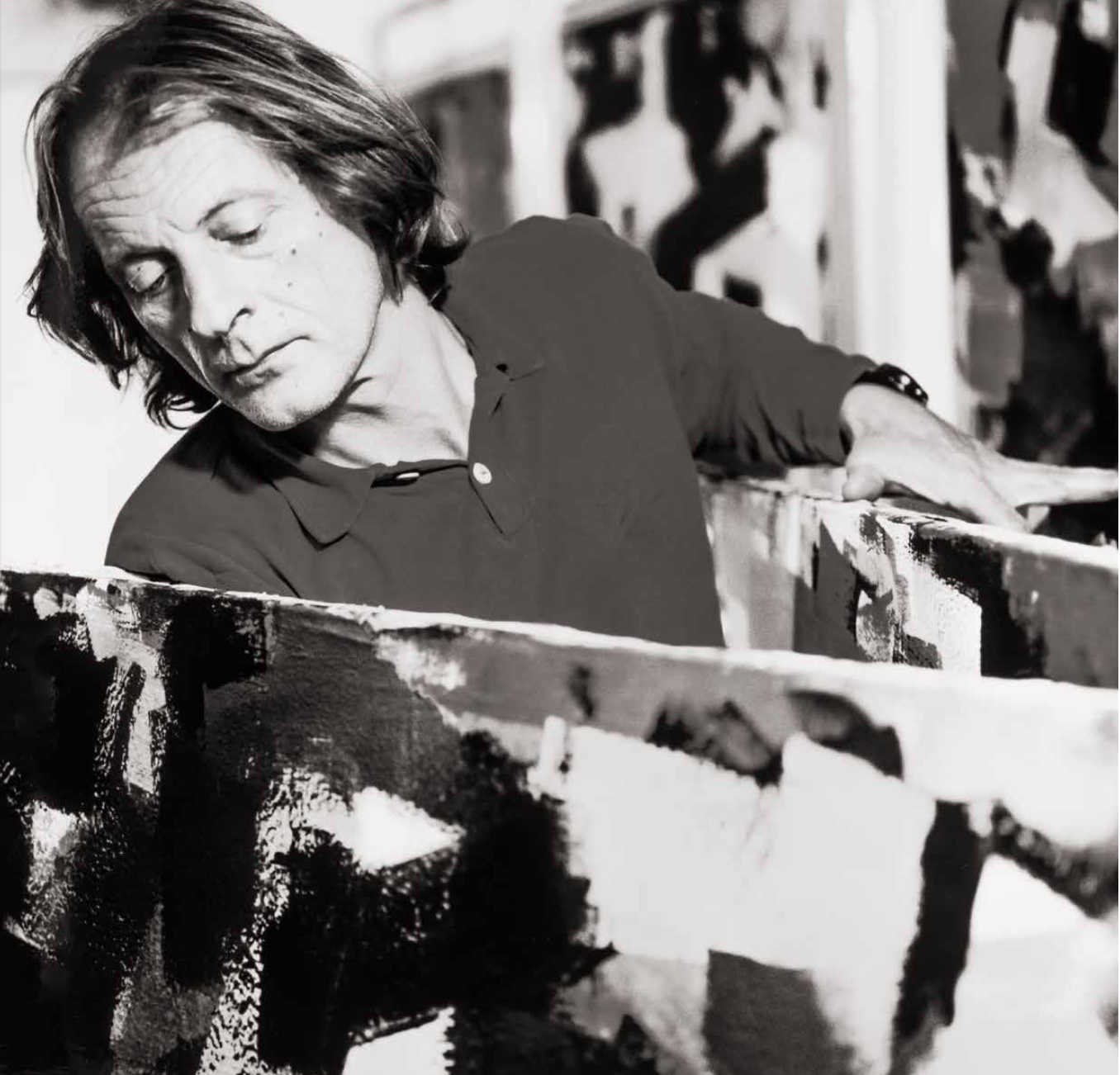
*1949 	        Aus einer alten Kärntner Familie stammend wird Franz Jenull am 21. Mai in Kamering (Paternion, Kärnten) als zweitältester von 5 Geschwistern geboren.
+2017 		verstirbt Franz Jenull in Wörgl.

1960                 übersiedelt er mit seiner Familie nach Praxmar in St. Sigmund im Sellrain in Tirol.
1963-1967 	Im Alter von 14 Jahren beginnt er seine Ausbildung zum Industrie-Maschinenschlosser in der Schlosserei Oberhammer in Innsbruck, die er mit dem                         ---                        Facharbeiterbrief abschließt. Es entstehen erste Stahlskulpturen.
Um 1970 		besucht Franz Jenull Zeichenkurse bei Fritz Berger, dem Bildhauer Josef Opperer, sowie an der Fakultät für Architektur der Universität Innsbruck.
1975 		erhält Franz Jenull den Grafikpreis der Arbeiterkammer Tirol.
1979 		begegnet er Emilio Vedova anläßlich dessen Ausstellung in der Galerie im Taxispalais Innsbruck, der ihn, von den vorgelegten Zeichnungen Jenulls begeistert,                ---                         spontan einlädt, in seiner Klasse an der Akademie in Venedig Malerei zu studieren.
1980 		Erste Ausstellung in der Galerie am Grillhof in Vill in Tirol. Franz Jenull beginnt sein Studium an der Accademia di Belle Arti di Venezia bei Emilio Vedova               ---                         (Malerei) und Nedo Fiorentin (Anatomie).
1984 		kehrt Jenull nach mit Auszeichnung abgeschlossenem Studium nach  Innsbruck zurück.
1994 		stellt Franz Jenull „Acrylbilder und Zeichnungen nach der Figur, Radierungen, 1984-1994“ in der Galerie im Palais Enzenberg der Stadt Schwaz aus.                   ---                         Es erscheint ein umfassendes Katalogbuch.
1996/97	        kuratiert Johannes Atzinger seine Ausstellung „Schönscheu“ in der Kunsthalle II in der Weyrerfabrik Innsbruck.
1997 		Erste Nepalreise mit Extrembergsteiger und Schriftsteller Rudolf Alexander Mayr, und Johannes Atzinger.
---                         Im Juni übersiedelt Jenull nach Florenz in die „Wiege der Renaissance"
2015 		Rückkehr nach Tirol, Wörgl.
Franz Jenull
… e dietro a tutto la figura
´Mi interessa la storia e la filosofia e mi piace molto la marmellata a colazione.´ Franz Jenull, 1994
Da quando Wassily Kandinsky ha contrapposto nel 1911 in `lo spirituale nell’arte´ il puro realismo alla pura astrazione, è in corso il dibattito sulla pittura figurativa e astratta, pervadendo la modernità e raggiungendo negli anni '50 il suo controverso culmine dopo le catastrofi del nazionalsocialismo e della seconda guerra mondiale. Prima ancora, nell'arte austriaca, ´Nuova Oggettività´ e ´Cinetismo Viennese´ si fronteggiavano, come un realismo regionale fronteggiava le prime libere astrazioni motivate dal cubismo. Definita come ´degenerata´ dai nazionalsocialisti, la pittura gestuale-astratta si diffuse in tutta Europa per effetto dell'´espressionismo astratto´ americano e dell'´informale´ francese dal 1950 in poi. In Austria, tra gli altri, con Arnulf Rainer, Maria Lassnig e Hans Staudacher, in Germania con Karl Otto Götz, in Italia va menzionato soprattutto Emilio Vedova a Venezia.
I ´Colloqui di Darmstadt´ del 1950 mostrano quanto fosse intensamente e ideologicamente connotata la discussione sull'astrazione e il realismo nell'arte. Sotto il titolo ´Sull'immagine dell'uomo nel nostro tempo´, hanno discusso in particolare Willi Baumeister e Hans Sedlmayr, che vedeva nell´arte astratta la ´perdita del centro´ e un segno del caos. Adorno sosteneva un concetto aperto di arte liberato dai falsi ideali di armonia. Nella Guerra Fredda che seguì, la dicotomia tra ´figurativo´ e ´non figurativo´ fu ulteriormente ideologizzata e la pittura astratta rappresentava la libertà dell'Occidente contro il ´realismo´ del blocco socialista dell´Europa dell´Est. Dopo il boom pittorico postmoderno dei ´Nuovi Selvaggi´ negli anni '80, che reagiva al minimalismo e all'arte concettuale, e la fine della Guerra Fredda, il rapporto tra realismo e astrazione si era disteso, anche grazie a Gerhard Richter, che a sua volta coniugava nella sua opera sia le esperienze del realismo socialista sia quelle della libertà d'Occidente. Astrazione e figurazione cominciarono a compenetrarsi e a rivitalizzarsi a vicenda.
´Nella misura in cui anche l'arte osserva le sue leggi, il mio lavoro astratto è da intendersi sotto la bandiera del 20° secolo.´  Franz Jenull ha scritto questo nel suo quaderno di schizzi nel 1996 e con esso il suo impegno per il progetto del modernismo espressivo e contro l´autoreferenzialità della ´pittura come pittura´, che stava appena iniziando a prendere forma sotto la pressione dei nuovi media.
Il suo lavoro pittorico, sviluppato dialetticamente tra figurativo e astratto a partire dal 1980, è uno dei passaggi. I suoi quadri disegnano percorsi di transizione e di passaggio, e come Gilles Deleuze sono ´figurali´, ciò che è da dimostrare.
Jenull stesso parla del pericolo di una dialettica in un quadro e intende esattamente quella tra astratto e figurativo: ´Se si tratta principalmente di discussioni formali astratte [...] non è l'opera ma l'artista stesso [...] che è in pericolo di soccombere a dialettiche contraddittorie´. Eppure, i dipinti di Franz Jenull possono essere compresi solo dialetticamente.

Nato in Carinzia, Franz Jenull si è fatto strada nell'arte in Tirolo. Le sue prime opere sono state create negli anni '70, principalmente studi paesaggistici e rupestri dei suoi immediati dintorni a Sellrain. L'incontro con Emilio Vedova, in occasione della sua mostra nel 1979 alla Galleria Taxispalais  di Innsbruck, fu la prima scintilla per una pretesa per tutta la vita di continuare ad indagare le possibilità della pittura astratta. A Innsbruck, Vedova aveva esposto in un'ampia mostra 73 opere dal 1935, accompagnate da documentazione fotografica. Jenull gli presentò con sicurezza i suoi disegni, per i quali Vedova lo invitò spontaneamente a studiare da lui a Venezia.
Franz Jenull fece la sua prima apparizione artistica pubblica nel 1980, in una mostra presso la Galleria Grillhof a Innsbruck. Supportato dal pittore di Innsbruck Fritz Berger, mostra disegni di figure e paesaggi sull'orlo dell'astrazione; allora la sua decisione di andare a Venezia era già presa.

Venezia
A Venezia, Vedova lavorava a quadri di grande formato, molto energici, nei quali, dopo i precedenti ´Plurimi´, influenzato da un precedente viaggio in Messico, torna ad un uso accresciuto del colore.
Questi dipinti, di dimensioni fino a tre metri e disposti in cicli, sono stati esposti con successo alla Documenta 7 a Kassel nel 1982 e, nello stesso anno, alla 40a Biennale di Venezia. Professore all'Accademia di Belle Arti di Venezia dal 1975, Vedova aveva insegnato in precedenza, dal 1965 al 1969, all'Accademia Estiva di Salisburgo. Lì, come riporta Wieland Schmied, scrisse ´Silenzio, Ordine, Disciplina´ come motto per la sua classe.
Sieglinde Hirn ha poi evidenziato anche nelle opere di Franz Jenull il rapporto dialettico tra libertà e disciplina.  Vedova ha inteso la sua scuola come un laboratorio per ´chiamare lo studente alla massima vigilanza, a mettere la sua mente in prontezza alla battaglia […] Ciò a cui aspiriamo è una scuola umana dove, prima ancora di dipingere, si metta alla prova l'intima necessità di creare.´  Lo scrive Vedova nel suo programma didattico all'Accademia Estiva di Salisburgo. Jenull era uno degli studenti prediletti di Vedova, uno dei suoi più stretti collaboratori all'Accademia di Belle Arte di Venezia; l'offerta di Vedova, di diventare il suo assistente personale e di rimanere a Venezia, fu rifiutata da Jenull a favore del proprio lavoro.
Nel clima aperto e discorsivo della classe di Vedova, Jenull trova la sua strada verso la storia dell'arte e la filosofia. La sua vasta biblioteca filosofica, con importanti opere da Wittgenstein a Heidegger, da Deleuze a Sloterdijk, offre uno spaccato dei suoi studi che duravano tutta la vita.
A Venezia, Franz Jenull intensificò anche il suo interesse per l'anatomia umana. Qui, Nedo Fiorentin è il suo maestro. La formazione classica presso le accademie d'arte italiane gli ha permesso anche di lavorare con i disegni e le stampe. Innumerevoli gli studi anatomici e del nudo realizzati su carta, disegni che costituiscono, secondo il concetto di ´disegno´ di Giorgio Vasari, il centro intellettuale del suo lavoro pittorico.

Innsbruck
Nel 1984 Franz Jenull tornò a Innsbruck. Per quanto riguarda l'arte, non c’era tanto movimento: la ´Nuova pittura selvaggia´ in Austria era un affare puramente viennese. La scena locale si è ritrovata nell´associazione degli artisti tirolesi. Membro lì dal 1989, Jenull ha lavorato ritirato sulla continuazione del suo lavoro veneziano. Si stacca rapidamente dall'Informale del suo Maestro. Jenull non si basa su un automatismo emotivo e gestuale, è più interessato alla riduzione dell'espressione e al superamento dell'individuo. Ciò richiede regolarità e le ricava dall'anatomia della figura umana e dalla sua proporzionale scomposizione nel senso dei maestri del Rinascimento italiano. Questo gli dà la sicurezza formale con la quale trova, attraverso le opere ancora più dinamiche come ´Intern´ o ´dopo L. Rivers´ del 1987, il corpo centrale del suo lavoro. Dal 1990 nascono lavori che Inge Praxmarer definì come ´accostamenti di barre colorate, ridotte a pochi colori´.
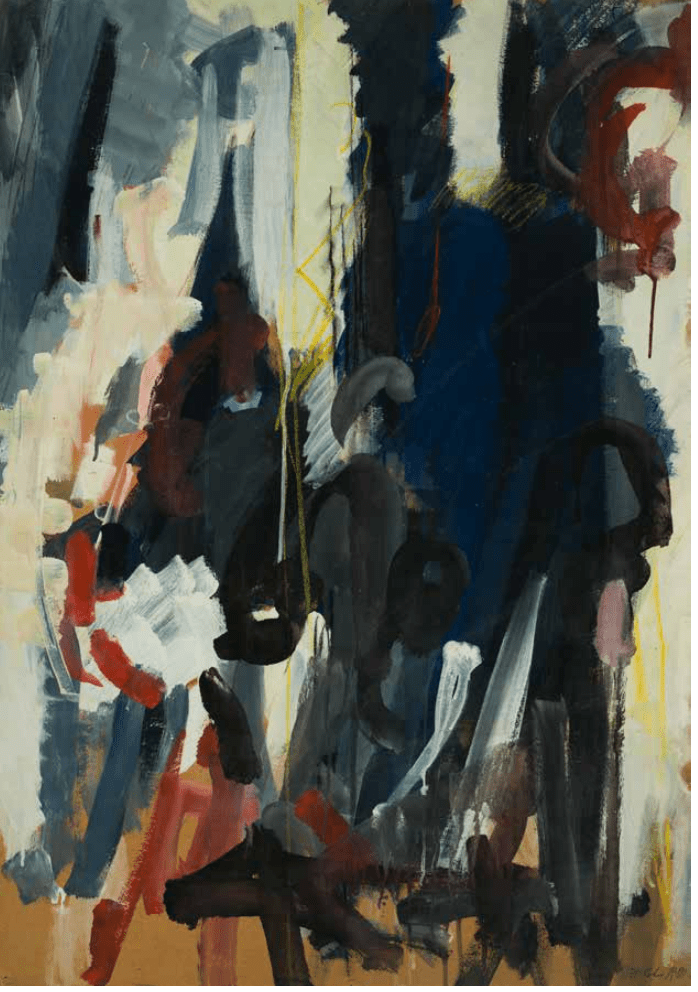
Sopra la figura, inizialmente creata sulla tela, Franz Jenull sviluppa in molti strati e ripetuti cicli di stratificazione e sovra-verniciatura una pittura non figurativa - ´affilandola´ come lo chiama lui, a volte nell'arco di tre fino a vent'anni. Con ampie pennellate, alternando tra spontaneità e controllo, porta il colore e la forma ad una densità poetica, nel suo ritmo anche musicale, che apre così spazi pittorici del tutto nuovi.
Intitolata solo con i codici dei colori utilizzati - negando così anche qualsiasi riferimento narrativo - la scala cromatica rimane ridotta. Rosso, bianco, giallo e blu. Il dipinto è quello che è. Il nero, sempre utilizzato, crea spazio e può essere letto sia come profondità prospettica dello spazio sia come, secondo Platone, ombra che amplia la conoscenza. Franz Jenull espone questi suoi dipinti regolarmente in Tirolo, ed oltre, fino a quando, nel 1997, si congeda nuovamente dal Tirolo con la mostra ´schönscheu´ (´timido di bellezza´) al Kunstraum II di Innsbruck, curata in modo congeniale da Johannes Atzinger nella sua giustapposizione di dipinti astratti e figurativi.

Firenze
Franz Jenull cerca l'atmosfera del Rinascimento italiano assorbita a Venezia e una nuova sfida pittorica, e si reca a Firenze nel 1997. In questo modo, si inserisce in una schiera di artisti tirolesi che prima di lui avevano trovato la strada per l'Italia. Rudi Wach e Helmut Schober si sono recati a Milano, Peter Willburger sulla Costiera Amalfitana dopo aver studiato con Max Weiler all'Accademia di Belle Arti di Vienna. Non c'è mai stato uno scambio regolare tra questi artisti. Tuttavia, nella città della più antica accademia d'arte e nelle vicinanze del David di Michelangelo, Jenull trovò un legame con la scena artistica fiorentina. Con il più anziano Riccardo Guarneri e il più giovane Luca Giacobbe, è stato unito da apprezzabili amicizie e, nonostante le diverse concezioni, da uno scambio artistico. A Firenze, Franz Jenull scopre un nuovo modo di dipingere. La sovrapittura dei quadri di Innsbruck, che aveva portato con sé, è sintomatica di questo. Con la scritta ´La neve si è sciolta´, il bianco scompare completamente dai suoi dipinti. Le immagini diventano più dense, formalmente più dettagliate e colorate. Di conseguenza, la figura, preferibilmente in costellazioni di tre, divenne sempre più prominente. I quaderni degli schizzi di Franz Jenull illustrano che egli basava inizialmente il suo lavoro sulle modelle viventi e in seguito anche sugli scatti fotografici dei nudi erotici di Nobuyoshi Araki.
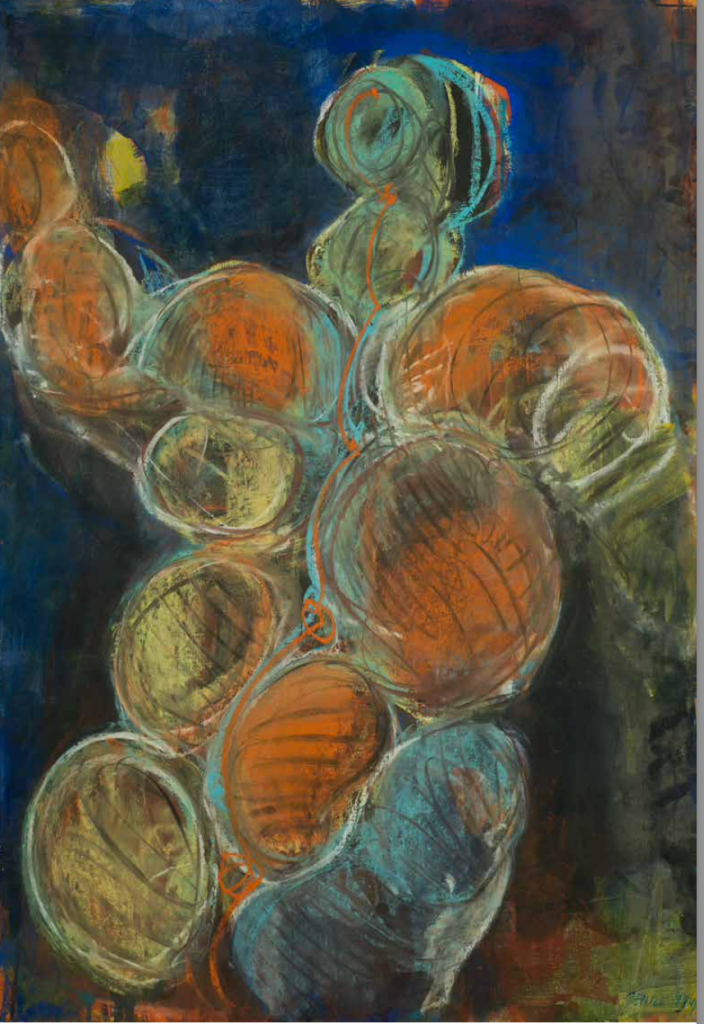
A Firenze, nel cuore del Rinascimento, Franz Jenull si interessò delle riflessioni di Giorgio Vasari sul disegno e il suo rapporto con l'applicazione pittorica.  Anche tre viaggi in Nepal, con l'esperto nepalese Rudolf Alexander Mayr nel 1997, 1998 e 2002, possono essere responsabili della crescente compressione ed importanza della linea nelle opere fiorentine. Jenull chiama una serie di tali incisioni condensate ´reticolato centrale nepalese´. I diari di questi viaggi contengono le riflessioni di Jenull sul dibattito filosofico di Ernst Jünger e Martin Heidegger sulla linea, considerandola come ´meridiano zero´, come il nulla, e l´avvicinarsi all´essere come il suo superamento. Jenull cerca di risolvere questo problema relativo alla linea per la sua pittura: ´L'astrazione non è una vista elevata nelle belle arti, ma una necessità per riscoprire la forma. Con questo, cosa facciamo con la linea?´  Trova la soluzione a questo in un ´all over´, in cui la linea diventa reticolo che guida la formazione.
Franz Jenull ha potuto esporre con successo queste opere accompagnate da cataloghi, tra le altre, alla Galleria Il Ponte di Firenze e alla storica Libreria Bocca di Milano.

Classificazione artistica
Lo storico dell'arte italiano Nicola Nuti, che ha accompagnato l'opera fiorentina di Franz Jenull fino al suo trasferimento a Wörgl in Tirolo nel 2015, ha scritto: ´Nei grandi dipinti su tela di Jenull, il senso pittorico in definitiva consiste soprattutto nella percezione e non nella rappresentazione degli oggetti´,  intendo nient’altro che ´la realtà del dipinto stesso´, la cui realtà, nell´osservato, sta al di là della narrativa e del leggendario. La strategia di Jenull per questo rimane l'astrazione.
La figura rimane la base delle invenzioni della forma di Jenull, e, fino al suo ultimo lavoro, la loro struttura portante.

Franz Jenull prosegue dialetticamente la suddetta dicotomia tra astrazione e figurazione  in una registrazione progressiva della modernità e con l'intento di riunirli in un'unica unità pittorica. Eduard Beaucamp ha infine sottolineato  che i termini ´astratto´ e ´figurativo´ rappresentano solo semplificazioni grossolane e Gilles Deleuze ha a lungo auspicato un'espansione categorica dell'opposizione tra figurativo e astratto.
Deleuze propone una ridistribuzione della figurazione e dell'astrazione all'interno della storia dell'arte, una decostruzione di questi termini accoppiati, e introduce il concetto del "figurale". Il figurale non serve più alla rappresentazione come il figurativo, il cui opposto non è più l'astratto, perché entrambi i termini non si trovano sullo stesso piano. Una linea può essere quindi astratta, ma non figurativa. Deleuze sviluppa così un nuovo modello di astrazione, senza mettere in discussione la figurazione come controparte concettuale.  Nella sua pittura, Franz Jenull segue così l'estetica defigurativa di Deleuze, conducendola nella dissoluzione della figura nel figurale, che non rappresenta altro che la loro immagine.
Franz Jenull
… and behind all, the figure
´I’m very much interested in history and philosophy, and I love jam for breakfast.´ Franz Jenull, 1994
Ever since Wassily Kandinsky contrasted pure abstraction with pure realism in 1911, in ´Concerning the spiritual in art´, the debate about figurative and abstract painting has been ongoing, pervading modernity and reaching its controversial climax after the catastrophic consequences of the National Socialism and the World War II in the 1950s. Before that, in Austrian art, ´New Objectivity´ and ´Viennese Kineticism´ faced each other, like a regional realism faced the first abstractions deriving from cubism. Defamed by the National Socialists as ´degenerated´, gestural-abstract painting spread throughout Europe as a result of American ´abstract expressionism´ and French ´informal´ from 1950 onwards. In Austria, among others, with Arnulf Rainer, Maria Lassnig and Hans Staudacher, in Germany with Karl Otto Götz, and in Italy, Emilio Vedova in Venice deserves special mention.
The Darmstadt Talks of 1950 clearly reflect the intense and ideological connotation of the discussion about abstraction and realism in art. ´The human image in our time´ manifests the dispute especially between Willi Baumeister and Hans Sedlmayr, who saw in abstract art the ´loss of the center´  and a sign of chaos. Adorno had advocated an open concept of art freed from false ideals of harmony. In the Cold War that followed, the dichotomy between representational and non-representational was further ideologized, and abstract painting represented the freedom of the West in contrast to the ´realism´ of the socialist Eastern Bloc. After the postmodern painting boom of the ´New Wild Painting´ in the 1980s, a reaction to minimalism and to conceptual art, and the end of the Cold War, the relationship between realism and abstraction had relaxed, also thanks to Gerhard Richter, who combined in his art both the experiences derived from the socialist realism and the liberty of the west. Abstraction and figuration began to interpenetrate and revitalize each other.
´As art also keeps its proper laws, my abstract work is to be understood under the banner of the 20th century.´  This is what Franz Jenull wrote in his sketchbook in 1996 and thus, his commitment to the project of expressive modernism and against a self-referential ´painting as painting´ that was just beginning to take shape under the pressure of the new media. His painting productions, developed dialectically between figurative and abstract from 1980 on, is one of the progresses. His paintings show paths of transition and passage, which are, according to Gilles Deleuze, ´figural´, which is what needs to be shown. Jenull himself points towards the risk of a dialectic in a painting and refers precisely to that between abstract and figurative: ´Insofar it is primarily a matter of abstract formal confrontations [...], it is not the artwork but the artist himself [...] who is at risk of falling prey to contradictory dialectics´.  And yet, Franz Jenull's painting can only be understood dialectically.
Born in Carinthia, Franz Jenull had found access to art in Tyrol, and his first works were created in the 1970s, mainly landscape and rock studies of his immediate surroundings in the Sellrain valley. The acquaintance with Emilio Vedova, on the occasion of Vedova’s exhibition in 1979 in the Gallery Taxispalais in Innsbruck, was the initial ignition for Jenull’s lifelong claim to follow up on the challenges of abstract painting. In Innsbruck, Vedova had shown 73 works in a comprehensive exhibition of his drawings and graphic works since 1935, along with photographic documentation. Jenull had confidently presented his drawings to him, whereupon Vedova spontaneously invited him to frequent his painting masterclass at the Academy in Venice.
Franz Jenull made his first public appearance in 1980, in an exhibition at the Gallery Grillhof in Innsbruck. Supported by the Innsbruck painter Fritz Berger, he showed figure- and landscape drawings on the verge of abstraction. At that time, his decision to go to Venice was already made.

Venice
In Venice, Vedova was working on very energetic large-scale paintings, in which, after the previous ´Plurimi´, influenced by a preceding trip to Mexico, he returned to enforced colorfulness. These paintings, up to three meters in size and arranged in cycles, were successfully shown at the Documenta 7 in Kassel and at the 40th Venice Biennale, both in 1982. Active as a professor at the Accademia di Belle Arti in Venice from 1975, Vedova taught already earlier, from 1965-1969, at the Summer Academy in Salzburg (Austria), according to his motto ´Silence, Order and Discipline´, as reported by Wieland Schmied.  Sieglinde Hirn also referred to the dialectical relationship between freedom and discipline in Franz Jenull's work.  Vedova used his school as a laboratory to ´call the student to extreme vigilance, to prepare everybody’s mind for battle […] What we are striving for is a human school, where we are testing, first of all, even before painting, the inner necessity to create´ , as stated in Vedova’s teaching programme at the Summer Academy in Salzburg. Jenull was a favorite student of Vedova, one of his closest collaborators at the Accademia di Belle Arte in Venice; in favor of his proper artistic work, Jenull turned down Vedova's offer to become his personal assistant.
In the open and discursive climate of Vedova's class, Jenull finds himself even more drawn to art history and philosophy. His extensive philosophical library with important works from Wittgenstein to Heidegger, from Deleuze to Sloterdijk, gives an insight into his lifelong studies.
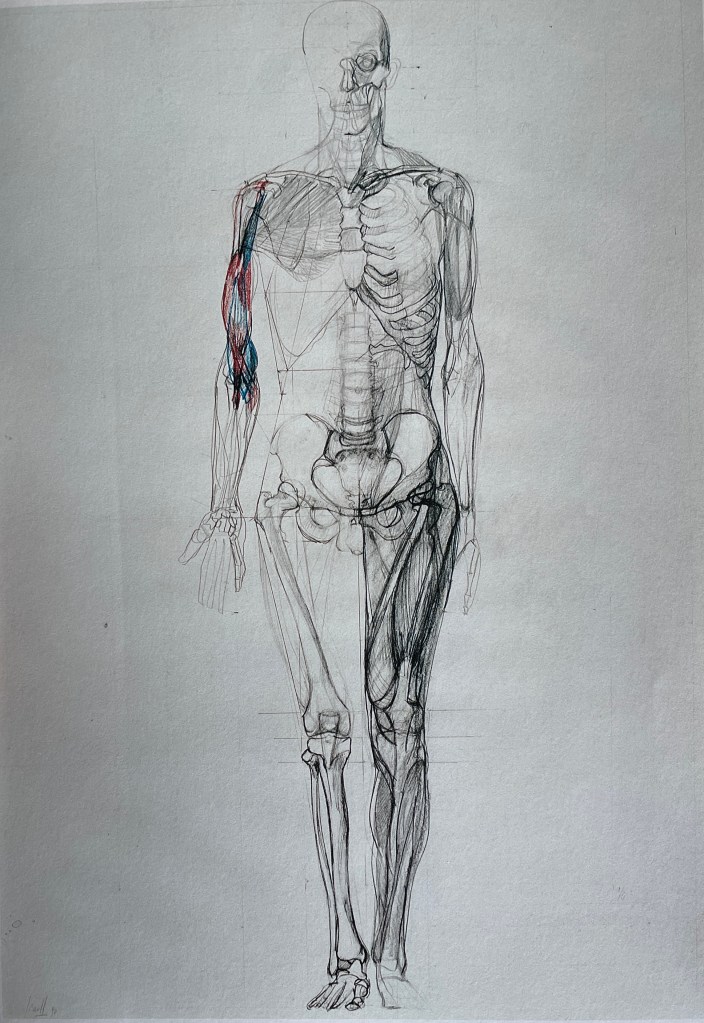
In Venice, Franz Jenull also intensified his interest in human anatomy, with Nedo Fiorentin as his professor. The classical education, characteristic for the Italian art academies, offered him further an intense confrontation with the disciplines of drawing and print. Countless anatomy and nude studies are created on paper, drawings that form the intellectual center of Jenull’s painting according to Giorgio Vasari's ´disegno´-concept.

Innsbruck
In 1984 Franz Jenull returned to Innsbruck. As far as art is concerned, there is not much going on here at the time - the ´New Wild Painting´ in Austria was a purely Viennese affair. The local scene was found in the Tyrolean artists' community. Being member there since 1989, Jenull works in seclusion on the continuation of his Venetian creation, promptly breaking away from his teacher’s ´informal´. Jenull does not rely on an emotional, gestural automatism; he is more concerned about reduction in expression and overcoming the individual. This requires regularities, which he receives from the anatomy of the human figure and its proportional decomposition in the sense of the masters of the Italian Renaissance. This gives him the formal confidence with which he finds his central body of work via even more dynamic works like ´Intern´ or ´dopo L. Rivers´ from 1987. From 1990 onwards he worked on his ´color bar paintings´, defined by Inge Praxmarer as ´being reduced to a few colors.´.
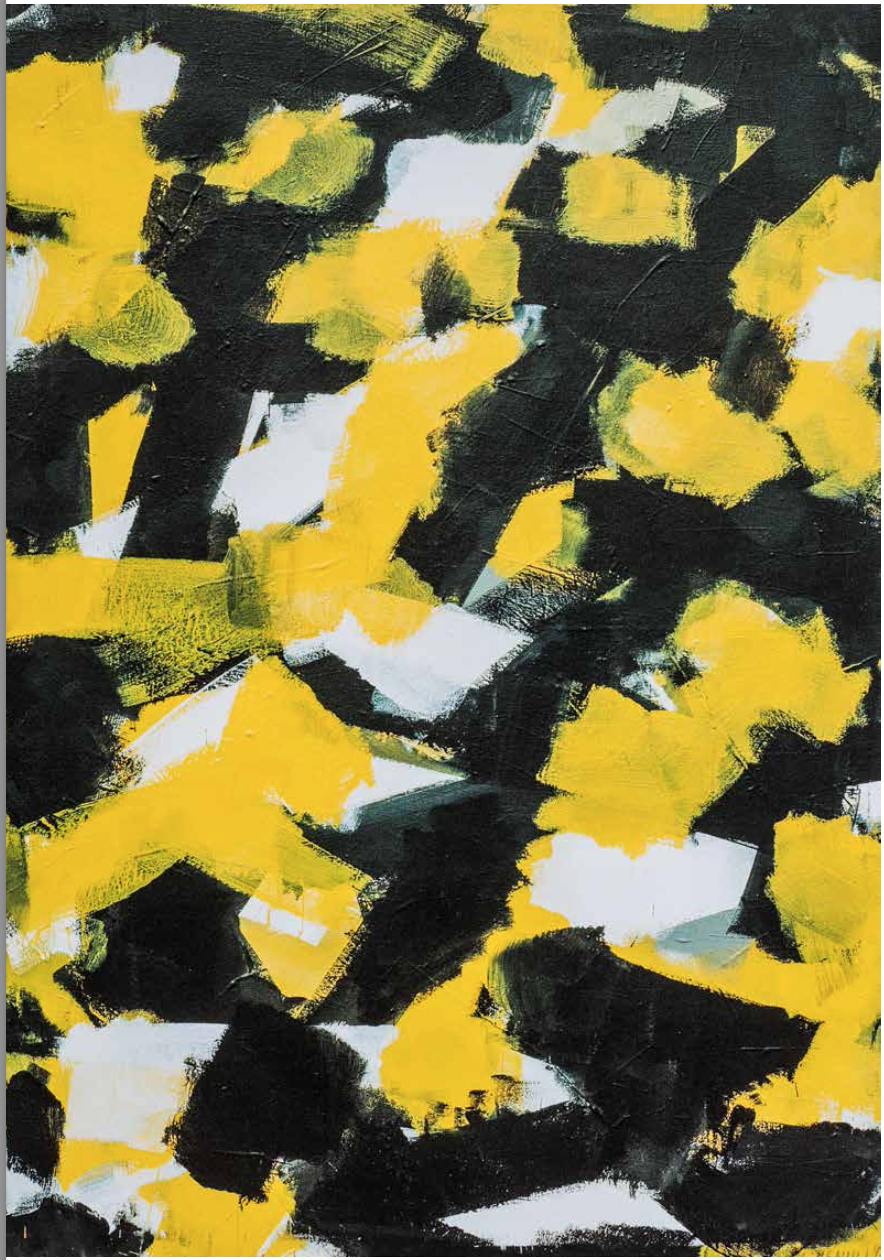
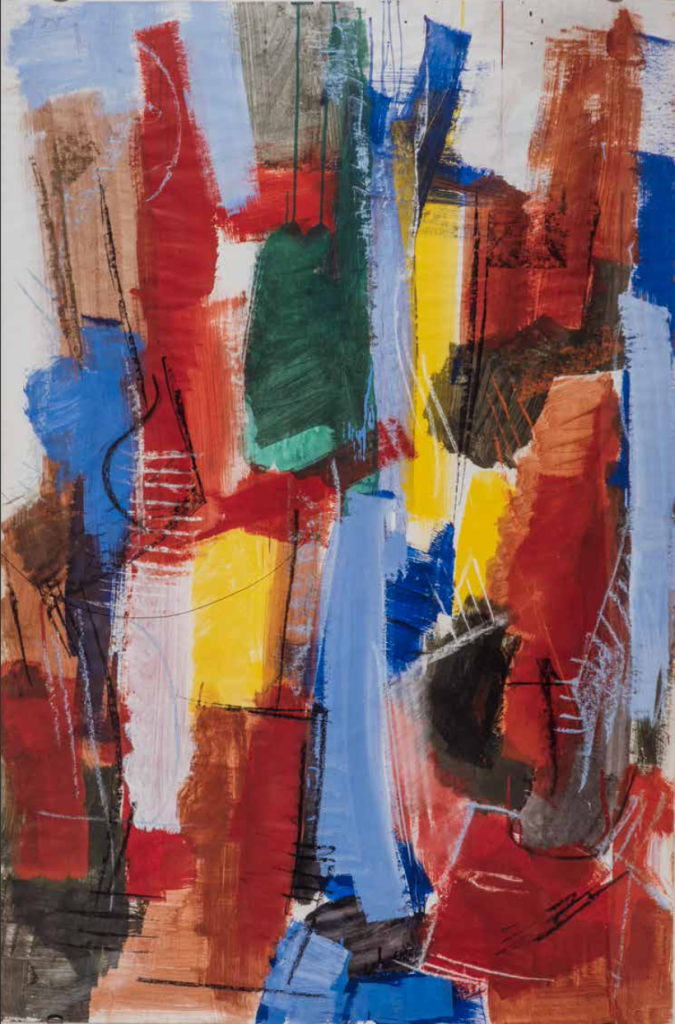
Over the figure, initially laid out on canvas, Franz Jenull develops a non-figurative painting in many layers of acrylic paint and numerous cycles of over-painting, ´sharpenings´ as he calls them, sometimes over three to twenty years, with broad brushstrokes and in an interplay of spontaneity and control, which brings color and form together to create a poetic and even rhythmic density in his paintings, opening up entirely new pictorial spaces. Often titled only with the codes of the colors used - thus also negating any narrative reference - the color scale remains small. Red, white, yellow and blue. The painting is what it is. The black that is consistently used creates space and can be interpreted as perspective spatial depth and, according to Plato, as the shadow that expands knowledge.
Franz Jenull exhibited these paintings regularly in Tyrol until he finally bid farewell to Tyrol again in 1997, with the solo exhibition ´schönscheu´ (´shy of beauty´), congenially curated by Johannes Atzinger in its juxtaposition of abstract and figurative paintings, at Atzinger’s Gallery Kunstraum II in Innsbruck.

Florence
Franz Jenull seeks the atmosphere of the Italian Renaissance absorbed in Venice as well as new artistic challenges, and thus moves back to Italy, to Florence, in 1997. Accordingly he joins a line of Tyrolean artists who had also found their way to Italy. Rudi Wach and Helmut Schober went to Milan, Peter Willburger moved to the Amalfi Coast after studying with Max Weiler at the Academy of Fine Arts of Vienna. A frequent exchange between these artists never took place. However, in the city of the world´s oldest art academy and nearby Michelangelo's David, Jenull found access into the Florentine art scene. With the slightly older Riccardo Guarneri and the younger Luca Giacobbe, he shared an appreciative friendship and, despite different concepts, an artistic exchange. In Florence, Franz Jenull approached a new way of painting. Symptomatic of this is the over-painting of his paintings brought with him from Innsbruck. According to his conceptual definition ´The snow has melted´, the white disappears completely from his paintings. The paintings become denser, formally more detailed and colorful.
As a result, the figure also increasingly penetrates, preferably in constellations of three. Initially still working with nude models, Franz Jenull, as a perusal of his sketchbooks shows, later on was also inspired by Nobuyoshi Araki's erotic nude photographs.

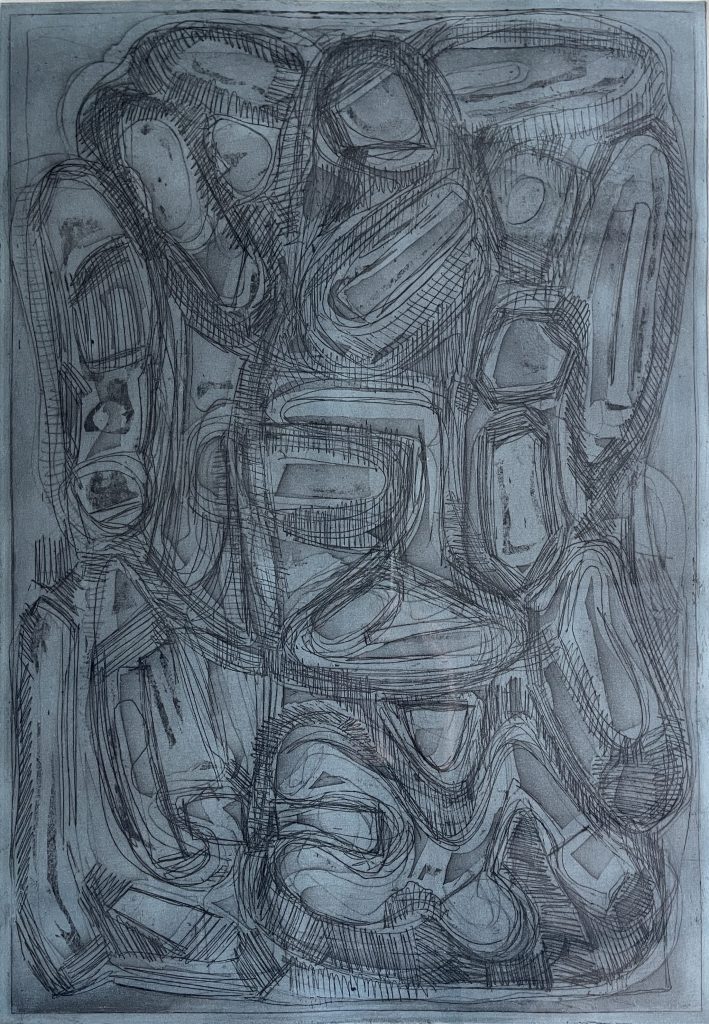
In Florence, at the center of the Renaissance, Franz Jenull explores Giorgio Vasari's thoughts of drawing and its connection to the application of paint.  Three expeditions to Nepal with the Nepal expert Rudolf Alexander Mayr in 1997, 1998 and 2002 may also be responsible for the increasing density and relevance of the line in Jenull’s Florentine artworks. In line to this, Jenull calls a series of such condensed etchings 'Nepalese Central Wicker (-work)´. Jenull’s diaries of these trekking trips contain his reflections on the philosophic debate between Ernst Jünger and Martin Heidegger about ´the line´, considering the line as ´meridian zero´, as nothingness, and the ´turning to Being´ as its solution. Jenull attempts to overcome this problem related to the line in his painting: ´Abstraction is not an elevated, a superior vision in visual arts, but the necessity to rediscover, to revise the form; thus, how to deal with, how to handle ´the line´?´  He finds the solution for this in an ´All Over´, in which the line, as a network, takes over the formative lead.
Franz Jenull exhibited these works, accompanied by catalogues, successfully, among others, at the Gallery ´Il Ponte´ in Florence and the historical ´Libreria Bocca´ in Milan.

Artistic classification
The Italian art historian Nicola Nuti, who accompanied Franz Jenull's Florentine work until he moved back to Wörgl in Tyrol in 2015, writes: ´In Jenull´s large scaled canvases, the sense of the image is entrusted more to perception than to representation’. , meaning nothing other than the ´reality of the image´ itself, whose realistic observation lies beyond the narrative and the legendary. Jenull's strategy for this remains ´abstraction´. The figure remains the basis of Jenull's formal inventions, the sustainable structure until his late work.

The abovementioned dichotomy of abstraction and figuration  is hence dialectically continued by Franz Jenull in an extrapolation of modernism, with the claim to bring them together in one artistic entity. Eduard Beaucamp recently pointed out that the terms ´abstract´ and ´figurative´ only represent gross simplifications   and Gilles Deleuze has long called for a categorical expansion of the opposition of ´figurative´ and ´abstract´. Deleuze proposed a redistribution of ´figuration´ and ´abstraction´ within art history, a deconstruction of this pair of concepts, by introducing the concept of the ´figural´. ´The figural´ no longer serves representation like ´the figurative´, whose opposite is no longer ´the abstract´, because the two concepts are not even at the same level. As a consequence, a line can be abstract but not figurative. Deleuze therefore develops a new ´model of abstraction´ without questioning ´figuration´ as a conceptual opponent.  Franz Jenull thus follows Deleuze's defigurative aesthetic in his painting, leading it in the dissolution of the figure into the figural, which stands for nothing else than its proper image.
Franz Jenull
… und hinter allem die Figur
„Ich beschäftige mich mit Interesse mit Geschichte und Philosophie und nehme zum Frühstück furchtbar gerne Marmelade.“ Franz Jenull, 1994
Seit Wassily Kandinsky 1911 in ´Über das Geistige in der Kunst´ der reinen Realistik die reine Abstraktion gegenüber gestellt hat, läuft die Debatte um ´figurativ´ und ´abstrakt´ in der Malerei, durchzieht sie die Moderne und hatte sie ihren streitbaren Höhepunkt nach den Katastrophen des Nationalsozialismus und des Zweiten Weltkrieges in den 1950er Jahren. Davor standen sich in der österreichischen Kunst ´Neue Sachlichkeit´ und ´Wiener Kinetismus´ gegenüber, wie ein regionaler Realismus ersten freien kubistisch motivierten Abstraktionen. Unter den Nationalsozialisten als ´entartet´ diffamiert, findet eine gestisch-abstrakte Malerei in Folge des amerikanischen ´abstrakten Expressionismus´ und des französischen ´Informel´ ab 1950 in ganz Europa ihre Verbreitung. In Österreich unter anderem mit Arnulf Rainer, Maria Lassnig und Hans Staudacher, in Deutschland mit Karl Otto Götz, in Italien ist vor allem Emilio Vedova in Venedig zu nennen.
Wie heftig und ideologisch konnotiert nun die Diskussion um Abstraktion und Realismus in der Kunst geführt wurde, zeigen die Darmstädter Gespräche 1950. Unter dem Titel ´Zum Menschenbild unserer Zeit´ stritten sich vor allem Willi Baumeister und Hans Sedlmayr, der in der abstrakten Kunst den ´Verlust der Mitte´  sah und ein Zeichen des Chaos. Adorno war für ein offenes, von falschen Harmonieidealen befreites Kunstkonzept eingetreten. Im folgenden Kalten Krieg wurde die Dichotomie zwischen ´gegenständlich´ und ´gegenstandslos´ weiter ideologisiert, stand die abstrakte Malerei für die Freiheit des Westens gegen den ´Realismus´ des sozialistischen Ostblocks. Nach dem auf den Minimalismus und die Konzeptkunst reagierenden postmodernen Malereiboom einer ´Neuen Wilden Malerei´ in den 1980er Jahren und dem Ende des Kalten Krieges, hatte sich das Verhältnis zwischen Realismus und Abstraktion entspannt, auch Dank Gerhard Richter, der wiederum aus den Erfahrungen des sozialistischen Realismus wie der Freiheit des Westens beides in seinem Werk zusammenführte. Abstraktion und Figuration begannen sich wechselseitig zu durchdringen und gegenseitig neu zu beleben.
´Insofern auch die Kunst ihre Gesetze behält, ist meine abstrakte Arbeit unter dem Banner des 20. Jahrhunderts zu verstehen.´
Das schreibt Franz Jenull 1996 in sein Skizzenbuch und damit sein Bekenntnis zum Projekt der expressiven Moderne und gegen eine selbstreferentielle ´Malerei als Malerei´, die sich gerade unter dem Druck der Neuen Medien zu firmieren begann. Sein ab 1980 dialektisch zwischen figurativ und abstrakt entwickeltes malerisches Werk ist eines der Passage. Seine Bilder zeichnen Übergangs- und Durchgangswege, und sind mit Gilles Deleuze ´figural´, was es zu zeigen gilt.
Jenull selbst spricht von der Gefahr einer Dialektik in einem Bild und meint genau jene zwischen abstrakt und figurativ: ´Sofern es sich hier vor allem um abstrakt formale Auseinandersetzungen […] handelt, ist nicht das Werk, sondern der Künstler selbst […] gefährdet, widersprüchlicher Dialektik anheim zu fallen“.  Und dennoch, die Malerei Franz Jenulls ist nur dialektisch zu verstehen.

In Kärnten geboren hatte Franz Jenull in Tirol den Zugang zur Kunst gefunden, erste Arbeiten entstehen in den 1970er Jahren, vor allem Landschafts- und Gesteinsstudien seiner nächsten Umgebung im Sellrain. Die Begegnung mit Emilio Vedova anlässlich dessen Ausstellung 1979 in der Innsbrucker Galerie im Taxispalais  war dann die Initialzündung für einen lebenslangen Anspruch, die Möglichkeiten abstrakter Malerei fortzuschreiben. Vedova hatte in Innsbruck mit 73 Arbeiten in einer umfassenden Schau sein zeichnerisches und grafisches Werk seit 1935 gezeigt, begleitet von fotografischem Dokumentationsmaterial. Selbstbewusst hatte Jenull ihm seine Zeichnungen vorgelegt, worauf ihn Vedova spontan einlud, bei ihm in Venedig zu studieren.
Franz Jenull ist 1980 in einer Ausstellung am Innsbrucker Grillhof erstmals öffentlich aufgetreten. Gefördert vom Innsbrucker Maler Fritz Berger zeigte er dort Figuren- und Landschaftszeichnungen an der Kippe zur Abstraktion; da stand sein Entschluss schon fest, nach Venedig zu gehen.

Venedig
In Venedig arbeitete Vedova gerade an großformatigen, sehr energiegeladenen Bildern, in denen er nach den vorangegangenen ´Plurimi´, geprägt von einer vorangegangenen Mexikoreise, wieder zu einer verstärkten Farbigkeit zurückfindet. Damit erfolgreich waren diese in Zyklen angelegten bis zu drei Meter großen Bilder 1982 auf der Documenta 7 in Kassel und im selben Jahr auf der 40. Biennale in Venedig zu sehen. Seit 1975 als Professor an der Accademia di Belle Arti in Venedig, unterrichtete Vedova schon früher, von 1965-69, an der Sommerakademie in Salzburg. Dort hatte er, wie Wieland Schmied berichtet ´Silenzio, Ordine, Disciplina´ als Motto in seine Klasse geschrieben.  Auf die dialektische Beziehung von Freiheit und Disziplin hat Sieglinde Hirn dann auch bei Franz Jenull hingewiesen.  Vedova verstand die Schule als Laboratorium, um ´den Schüler zu äußerster Wachsamkeit aufzurufen, seinen Geist in Kampfbereitschaft zu versetzen […] Was wir anstreben, ist eine menschliche Schule, wo zunächst, noch vor dem Malen, die innere Notwendigkeit zum Schaffen geprüft wird.“  Das schreibt Vedova in seinem Statement für die Lehrtätigkeit an der Salzburger Sommerakademie. Jenull war ein Lieblingsschüler Vedovas, einer seiner engsten Mitarbeiter an der Accademia di Belle Arte in Venedig; das Angebot Vedovas, sein persönlicher Assistent zu werden und in Venedig zu bleiben, lehnte Jenull zu Gunsten seiner eigenen Arbeit ab.
Im offenen und diskursiven Klima der Klasse Vedovas findet er zur Kunstgeschichte und zur Philosophie. Einen Einblick in seine lebenslangen Studien gibt seine umfangreiche philosophische Bibliothek mit wichtigen Arbeiten von Wittgenstein bis Heidegger, von Deleuze bis Sloterdijk.
In Venedig intensiviert Franz Jenull auch sein Interesse an der menschlichen Anatomie. Hier ist Nedo Fiorentin sein Lehrer. Die klassische Ausbildung der italienischen Kunstakademien ermöglichte ihm aber auch die Beschäftigung mit Zeichnung und Druckgrafik. Es entstehen ungezählte Anatomie- und Aktstudien auf Papier, Zeichnungen, die, im Sinne von Giorgio Vasaris ´disegno´-Begriff, das intellektuelle Zentrum seines malerischen Werkes bilden.

Innsbruck
1984 geht Franz Jenull zurück nach Innsbruck. Hier ist was die Kunst betrifft gerade nicht viel los – die ´Neue wilde Malerei´ war in Österreich eine rein Wiener Angelegenheit. Die lokale Szene fand sich in der Tiroler Künstlerschaft. Seit 1989 dort Mitglied, arbeitet Jenull zurückgezogen an der Fortsetzung seines venezianischen Werkes. Vom Informel seines Lehrers löst er sich schnell. Jenull setzt nicht auf einen emotionalen, gestisch ausgeführten Automatismus, vielmehr geht es ihm um Reduktion im Ausdruck und die Überwindung des Individuellen. Dazu braucht es Gesetzmäßigkeiten und die holt er sich aus der Anatomie der menschlichen Figur und deren proportionaler Zerlegung im Sinne der Meister der italienischen Renaissance. Das gibt ihm jene formale Sicherheit mit der er über die noch bewegteren Arbeiten wie ´Intern´ oder ´dopo L. Rivers´ aus 1987 zu seinem zentralen Werkblock findet. Ab 1990 entstehen seine, von Inge Praxmarer so benannten, auf wenige Farben reduzierten ´Farbbalkenbilder´.
Über der zunächst auf der Leinwand angelegten Figur entwickelt Franz Jenull in vielen Farbschichten und Übermalungen, ´Schärfungen´ wie er sie nennt, teilweise über drei bis zwanzig Jahre, mit breitem Pinselstrich und in einem Wechselspiel von Spontanität und Kontrolle, eine gegenstandslose Malerei, die Farbe und Form zu einer poetischen, in ihrer Rhythmik auch musikalischen Dichte zusammenführt und so ganz neue Bildräume eröffnet. Betitelt nur mit den Codes der verwendeten Farben – so wird auch jede erzählerische Referenz negiert - bleibt die Farbskale klein. Rot, Weiß, Gelb und Blau. Das Bild ist was es ist. Das immer verwendete Schwarz ist raumbildend und kann als perspektivische Raumtiefe und mit Platon als Erkenntnis erweiternder Schatten gelesen werden.
Franz Jenull stellte diese Malerei regelmäßig in Tirol aus bis er sich schließlich, mit der von Johannes Atzinger in ihrer Gegenüberstellung abstrakter wie figurativer Bilder kongenial kuratierten Schau „schönscheu“ 1997 im Innsbrucker Kunstraum II, wieder von Tirol verabschiedete.

Florenz
Franz Jenull sucht die in Venedig aufgenommene Atmosphäre des italienischen Rinascimentos und neue malerische Herausforderung, und geht 1997 nach Florenz. Damit reiht er sich ein in eine Reihe Tiroler Künstler, die vor ihm ebenso den Weg nach Italien gefunden hatten. Rudi Wach und Helmut Schober nach Mailand, Peter Willburger zog es nach seinem Studium bei Max Weiler an der Wiener Akademie der Bildenden Künste an die Amalfiküste. Zu einem regelmäßigen Austausch dieser Künstler kam es nie. In der Stadt der ältesten Kunstakademie und in der Nähe von Michelangelo‘s David fand Jenull aber Anschluss an die Florentiner Kunstszene. Mit dem etwas älteren Riccardo Guarneri und dem jüngeren Luca Giacobbe verbanden ihn wertschätzende Freundschaften und, trotz unterschiedlicher Konzepte, ein künstlerischer Austausch.
In Florenz fand Franz Jenull zu einer neuen Malerei. Symptomatisch steht dafür die Übermalung der mitgebrachten Innsbrucker Bilder. Mit den Worten ´Der Schnee ist geschmolzen´ verschwindet das Weiß vollständig aus seinen Bildern. Die Bilder werden dichter, formal kleinteiliger und farbiger. In der Folge dringt auch immer mehr die Figur, bevorzugt in Dreierkonstellationen, durch. Zunächst noch mit Modellen, arbeitet Franz Jenull, wie die Durchsicht seiner Skizzenbücher zeigt, zuletzt auch nach den fotografischen Vorlagen der erotischen Akte Nobuyoshi Arakis.

In Florenz, im Zentrum der Renaissance beschäftigt sich Franz Jenull mit den Überlegungen Giorgio Vasaris zur Linienzeichnung und deren Verbindung zum Farbauftrag.   Für die zunehmende Verdichtung und Bedeutung der Linie in den Florentiner Arbeiten mögen auch drei Nepalreisen mit dem Nepalkenner Rudolf Alexander Mayr 1997, 1998 und 2002 verantwortlich sein. ´Nepalesisches Zentralgeflecht´ nennt Jenull eine Serie so verdichteter Radierungen. Die Tagebücher dieser Reisen bergen Jenull‘s Reflexionen zur philosophischen Debatte um die Linie bei Ernst Jünger und Martin Heidegger zwischen der Linie als ´Nullmeridian´, als das Nichts, und der Zuwendung zum Sein als dessen Überwindung.   Jenull versucht das Linienproblem für seine Malerei aufzulösen: ´Abstraktion ist nicht eine gehobene Sicht in der bildenden Kunst, sondern eine Notwendigkeit, die Form wieder neu zu sehen. Damit, was fangen wir mit der Linie an?´   Die Lösung dafür findet er in einem ´All Over´, in dem die Linie als Netzwerk die formbildende ästhetische Führung übernimmt.
Zeigen konnte Franz Jenull diese Arbeiten, von Katalogen begleitet, erfolgreich unter anderem in der Galleria Il Ponte in Florenz und in der Libreria Bocca in Mailand.

Künstlerische Einordnung
Der italienische Kunsthistoriker Nicola Nuti, der Franz Jenulls Florentiner Werk bis zu seinem Wegzug nach Wörgl in Tirol 2015 begleitet hatte, schreibt: ´In Jenull´s großen Leinwandgemälden schließlich besteht der Bildsinn vor allem in der Wahrnehmung und nicht in der Abbildung von Objekten´  und meint damit nichts anderes als die ´Wirklichkeit des Bildes´ selbst, dessen Realität im Anschauen jenseits des Erzählerischen und Legendären liegt. Jenull´s Strategie dazu bleibt die Abstraktion.
Grundlage dieser jenull´schen Formerfindungen bleibt die Figur, sie ist bis in sein Spätwerk deren tragfähige Struktur.

Die eingangs erwähnte Dichotomie von Abstraktion und Figuration  führt Franz Jenull also in einer Fortschreibung der Moderne dialektisch weiter, mit dem Anspruch, sie in einer Bildeinheit zusammenzuführen. Dass die Begriffe ´abstrakt´ und ´gegenständlich´ nur mehr grobe Vereinfachungen darstellen, darauf hat Eduard Beaucamp zuletzt hingewiesen  und Gilles Deleuze forderte schon lange eine kategoriale Erweiterung der Opposition von figurativ und abstrakt. Deleuze schlägt eine Neuverteilung von Figuration und Abstraktion innerhalb der Kunstgeschichte vor, eine Dekonstruktion dieses Begriffspaares, und führt den Begriff des ´Figuralen´ ein. Das Figurale dient nicht mehr der Repräsentation wie das Figurative, dessen Gegenteil nicht mehr das Abstrakte ist, weil beide Begriffe auch nicht auf derselben Ebene liegen. So kann eine Linie abstrakt sein, aber nicht figurativ. Deleuze entwickelt so ein neues Abstraktionsmodell, ohne die Figuration als konzeptuelles Gegenüber in Frage zu stellen.  Franz Jenull folgt in seiner Malerei also der defigurativen Ästhetik von Deleuze, führt sie in der Auflösung der Figur ins Figurale, das für nichts anderes steht als für ihr Bild.
1  Das ist der Titel von Hans Sedlmayr´s berühmter Streitschrift zur bildenden Kunst des 19. und 20. Jahrhunderts, erschienen 1948 im Otto Müller Verlag Salzburg
2  Franz Jenull, Skizzenbucheintrag vom 18.2.1996, Nachlass Franz Jenull, Wörgl
3  Franz Jenull, in: Galleria Il Ponte (Hrsg.), Franz Jenull. Die erinnerte Form, Edizione ´Il Ponte´, Florenz 2002, S.9
4  Emilio Vedova, Zeichnungen 1935-1950, Grafik 1962-1979, Photodokumentationen 1960-1979
5  Wieland Schmied, Die Dynamik des Widerspruchs. Gedanken über die Kunst Emilio Vedovas mit einem besonderen Blick auf das Jahrzehnt 1975-1985, in: Rudy Chiappini (Hrsg.), Emilio Vedova, Lugano 1993 S. 72
6  Sieglinde Hirn, Franz Jenull, ein in Tirol noch unbekannter Maler, in: Land Tirol (Hrsg.), Das Fenster. Heft 45, Innsbruck 1989, S. 4429
7  Emilio Vedova, Über die Lehrtätigkeit, in: Carla Schulz-Hoffmann, Emilio Vedova, München 1986,   S. 141- 142
8  Inge Praxmarer, Zu den Arbeiten von Franz Jenull, in: Jenull. Acrylbilder, Zeichnungen nach der Figur, Radierungen 1984-1994, Vomp 1994,        S. 5-9
9  Dazu: Edith Schlocker, Zu Farbbalken geballte Energie, in: Tiroler Tageszeitung, 18.12.1996, Nr. 293, S. 6
10  Dazu: Matteo Burioni (Hrsg.), Giorgio Vasari, Einführung in die Künste der Architektur, Bildhauerei und Malerei, Berlin 2006, S. 20
11  Dazu: Martin Heidegger, Zur Seinsfrage, Frankfurt 1956
12  Franz Jenull, Skizzenbuch, Nepal 1997
13  Nicola Nuti in: Jenull Paintings 1991-1997, Kens Art Gallery, Florenz
14  Christian J. Meier, Die Dichotomie Figuration und Abstraktion in der deutschen Kunst von 1945 bis 1986, Basel 2011
15  Eduard Beaucamp, Der säkulare Bilderstreit, in: H.W. Schmidt (Hrsg.), S.2014, 2005
16  Carolin Meister, Wilhelm Roskamm, Abstrakte Linien. Jackson Pollock und Gilles Deleuze, in: Claudia Blümle, Armin Schäfer (Hrsg.), Struktur, Figur, Kontur. Abstraktion in Kunst und Lebenswissenschaft, Berlin 2007, S. 223-250

